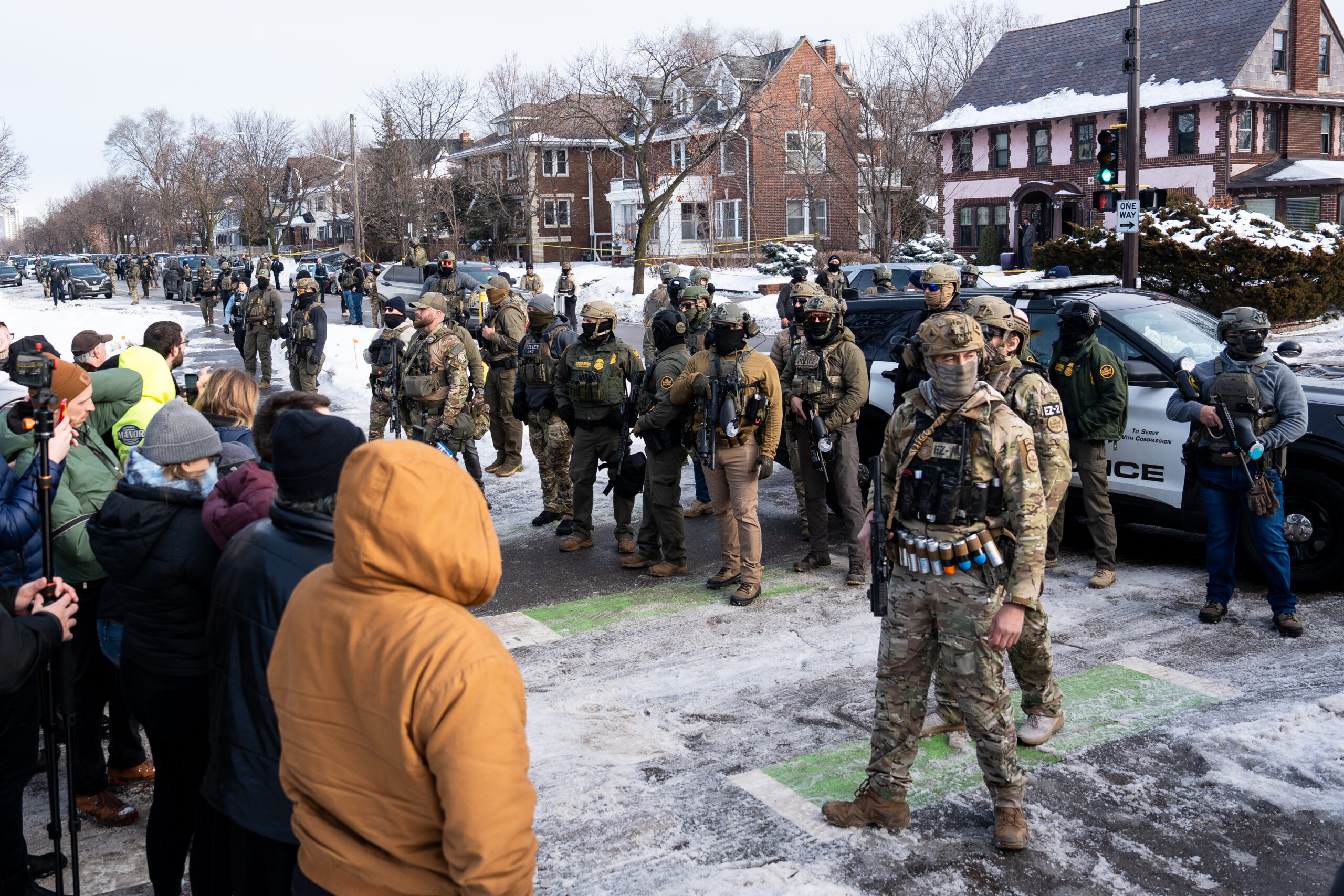
On January 7, 2026, an Immigration and Customs Enforcement operation in south Minneapolis ended with an ICE agent fatally shooting 37-year-old U.S. citizen Renee Nicole Good near East 34th Street and Portland Avenue. The operation involved multiple ICE vehicles and personnel, and several outlets reported that Good was not the target of the underlying enforcement action. Bystander video and footage recorded by an ICE agent show Good’s maroon SUV positioned diagonally across Portland Avenue for several minutes, with her in the driver’s seat and her wife, Becca Good, in the passenger seat alongside their dog.
Recordings show Becca exiting the SUV shortly before the shooting and beginning to film with her phone as additional ICE vehicles arrived and stopped in front of and behind the SUV. Agents approached on foot and audio captures commands for Good to exit the vehicle, with responses heard from inside. The available footage shows the SUV reversing slightly, turning its front wheels, and then moving forward as the agent filming moves toward the front driver’s side area. The videos then capture him drawing his firearm and firing multiple shots, including as the SUV passes close by him and continues down the street.
Federal officials later stated that Good used her vehicle in a way that endangered the agent and described the shooting as an act of self-defense, asserting that she had “run over” or struck him and had “weaponized” the SUV. They also linked her behavior to domestic terrorism and to a network of “professional agitators” allegedly obstructing immigration enforcement, while claiming she had interfered with ICE operations earlier that day. Local and state officials publicly questioned parts of this account, and independent reporting noted that visual analyses by multiple outlets examined the footage frame by frame, documenting the agent’s movement toward the vehicle and shots fired as it passed him, but leaving key questions about distance, timing, and perceived threat unresolved.
Federal use-of-force guidance instructs officers to avoid shooting at moving vehicles when they can instead protect themselves by moving out of the vehicle’s path, reflecting concerns that a dead or injured driver may lose control and create additional danger to the public. These standards, which are applied to federal immigration agents, treat firing at a moving vehicle as a last resort when no reasonable alternative exists. Meanwhile, news outlets also reported that AI-generated and manipulated images and videos circulated online purporting to identify an ICE agent involved in the shooting and link him to a wider conspiracy; subsequent coverage found that some widely shared visuals misidentified an uninvolved person and were later removed, corrected, or challenged.
Why it matters: This case tests how federal use-of-force rules are applied when officers confront moving vehicles and how clearly officials must substantiate claims about imminent threats before the public accepts lethal force as justified. It also illustrates how quickly disputed narratives, political framing, and even AI-generated misidentifications can shape perceptions of a single encounter, putting pressure on news outlets to balance law-enforcement accounts, visual evidence, and community concerns. Ultimately, the way this shooting is investigated, explained, and covered will influence public trust in immigration enforcement, local–federal cooperation, and the media’s ability to navigate contested, high-stakes incidents.
Claim: Renee Nicole Good “ran over” or otherwise struck an ICE agent with her vehicle before being shot.
Origin: Statements by Trump administration and Homeland Security officials in public briefings and interviews describing the encounter.
Verdict: ⚠️ Misleading
Rationale: Video from multiple angles shows the agent moving toward the front driver’s side of the SUV as it begins to roll forward, followed by shots fired through the windshield and driver’s side window as the vehicle passes close by. None of the available footage clearly depicts the agent being run over, and public reporting has not established a definitive physical impact matching that description. Presenting the encounter as conclusively involving Good “running over” the agent overstates what the current evidence supports while investigations remain ongoing. Source: CNN visual analysis and multi-outlet reporting
Claim: The agent was directly in the SUV’s path and had no option other than to shoot to avoid being hit.
Origin: Federal briefings and supportive commentary summarizing the shooting as a split-second reaction to an imminent collision.
Verdict: ⚠️ Misleading
Rationale: Independent visual analyses describe the agent approaching the front driver’s side area of the SUV as it begins to move, then firing as the vehicle continues past him down the street. The footage does not conclusively show the agent positioned directly in front of the vehicle at the moment each shot was fired, and some reporting notes that gunfire continued as the SUV was moving by rather than toward him. Treating the situation as leaving no possible alternative response resolves a fact-sensitive sequence that remains under review. Source: CNN and other outlets’ breakdowns of available video
Claim: ICE agents are trained to shoot when a vehicle moves toward them.
Origin: Commentary and public statements that portray the shooting as a standard, necessary response to an oncoming vehicle.
Verdict: ❌ False
Rationale: Federal use-of-force guidance instructs officers to avoid shooting at moving vehicles when they can instead protect themselves by moving out of the vehicle’s path, and Justice Department policy allows deadly force only when no reasonable alternative exists, “including stepping out of the vehicle’s path.” Reporting on ICE standards states that officers are instructed not to shoot at moving vehicles except in narrow circumstances involving an imminent threat of death or serious injury. These rules contradict claims that agents are trained to fire when a vehicle approaches them. Source: Associated Press and related policy-focused coverage
Claim: Good “weaponized” her SUV in an act of domestic terrorism.
Origin: Public comments by senior Trump administration and Homeland Security officials characterizing the incident after the shooting.
Verdict: ❓ Unsupported
Rationale: Describing the incident as domestic terrorism implies ideological motivation or coordinated planning. Public reporting has not identified evidence of extremist affiliation, prior violent activity, or organized intent by Good, and relatives have disputed portrayals of her as an activist or “professional agitator.” In the absence of investigative findings establishing a terrorism nexus, this framing remains an allegation rather than a substantiated description. Source: Reuters, AP, and multi-outlet summaries of official statements
Claim: Good was part of a broader network of “professional agitators” targeting ICE operations.
Origin: Statements by Senator JD Vance in press appearances and social media posts about the Minneapolis shooting.
Verdict: ❓ Unsupported
Rationale: Vance’s comments present Good as one participant in a coordinated campaign to harass or obstruct immigration enforcement. Her family and former partner have said she was not part of such a group, and public reporting has not documented organizational ties, communications, or operational roles that would substantiate this characterization. Without corroborating evidence from investigations or independent documentation, describing her as a professional agitator within a larger network overstates what is currently known. Source: AP and other outlets’ reporting on family responses and official statements
Claim: A short agent-filmed video “proves” the shooting was clearly justified self-defense.
Origin: Trump administration and Homeland Security officials promoting a brief clip from the agent’s vantage point as decisive evidence.
Verdict: ⚠️ Misleading
Rationale: The agent-filmed clip provides one vantage point showing commands issued to Good and the agent’s proximity to the SUV. However, other publicly available footage and independent visual analyses show the sequence from additional angles and highlight unresolved questions about distance, timing, and the availability of other responses. Treating a brief, contested recording as definitive proof overstates what it can reliably demonstrate while multiple investigations remain underway. Source: CNN and other outlets comparing multiple video angles
Claim: Good was part of a coordinated left-wing plot to attack or harass ICE officers as part of an organized campaign.
Source: Expanded interpretations in partisan commentary and online discussions that build on “professional agitator” language to suggest a clandestine operation.
Verdict: ❓ Unsupported
Rationale: These narratives portray the shooting as one episode in a centrally directed effort to target ICE personnel. Public reporting on the Minneapolis incident has not identified a command structure, operational planning, or case-specific evidence tying Good to such a plot, and relatives have rejected the idea that she was part of an organized campaign. Without investigative findings or documented coordination, treating the event as a coordinated conspiracy exceeds the available evidence. Source: AP and other mainstream coverage of family statements and investigative status
Claim: AI-generated images and online posts correctly “unmasked” an ICE agent involved in the shooting and exposed a broader cover-up.
Source: Viral social media posts and fringe websites that circulated synthetic or manipulated images and videos purporting to identify an ICE agent by name and link him to a wider conspiracy.
Verdict: ❌ False
Rationale: Subsequent reporting found that widely shared visuals and claims about an ICE agent’s identity were based on AI-generated or altered media and misidentified an uninvolved individual, who was then subjected to harassment despite having no role in the operation. No credible outlet or official inquiry has confirmed the online identifications, and later coverage made clear that the named person was not the agent who fired the shots. Because these narratives rely on fabricated imagery and incorrect personal details, they do not accurately “unmask” anyone or substantiate allegations of a cover-up. Source: Reuters, AP, and dedicated fact-checks on AI-manipulated content
| Outlet | Bar | Score |
|---|
| Outlet | Spin | Factual integrity | Strategic silence | Media distortion |
|---|