January 6 is now defined less by dispute over what happened than by disagreement over what the day is understood to represent. Official recognition this year emphasized democratic continuity, institutional resilience, and the seriousness of an attack on the constitutional transfer of power. That recognition, however, unfolded within a fragmented narrative landscape in which established facts coexist with selective emphasis, omission, and reframing.
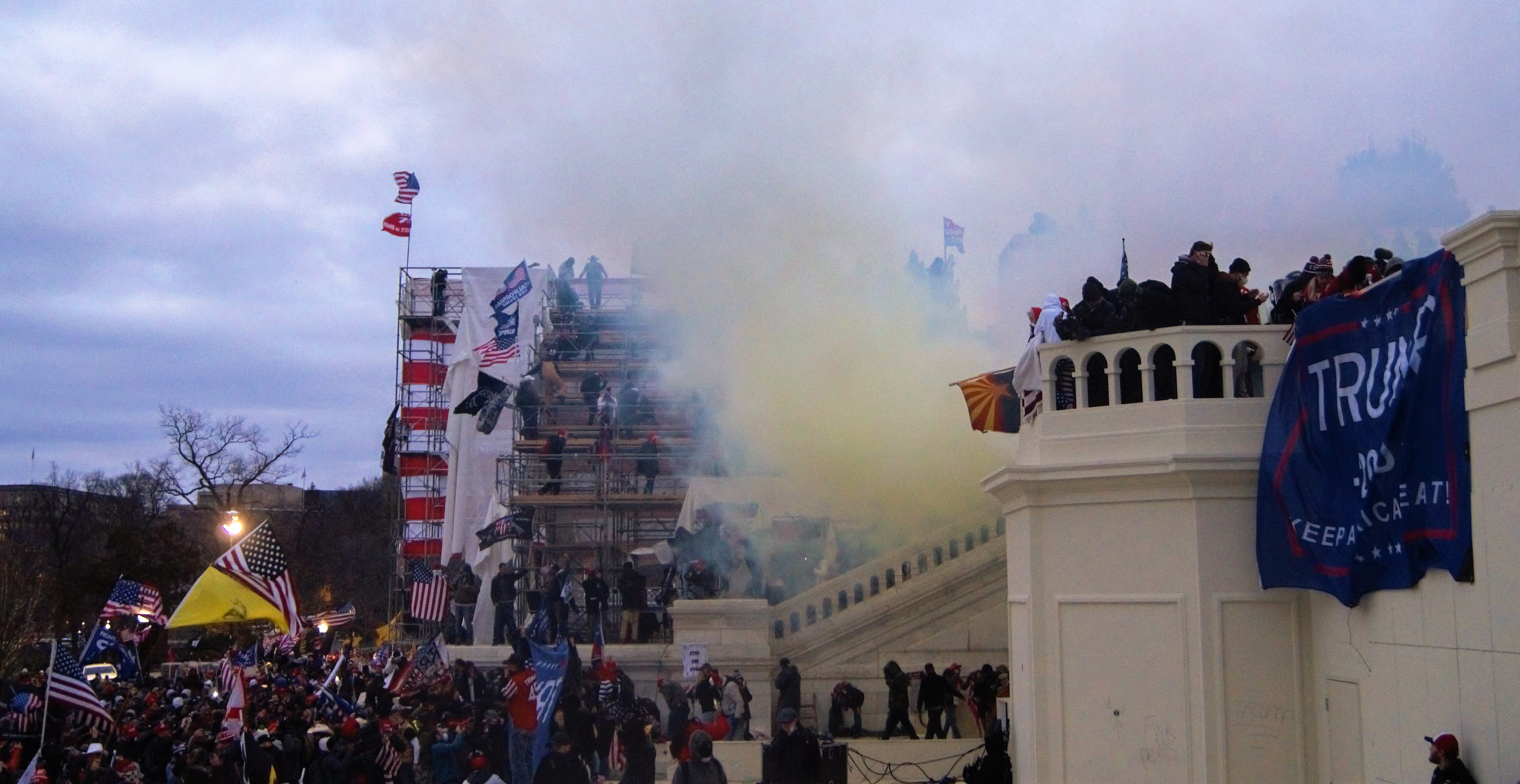
The basic contours of the event are not in serious factual dispute. On January 6, 2021, a violent mob breached the U.S. Capitol during the certification of the presidential election, forcing lawmakers to evacuate and temporarily halting a constitutionally mandated process. The attack resulted in deaths, injuries to law enforcement officers, extensive property damage, and hundreds of criminal prosecutions. Years later, some officers who defended the building continue to face lasting physical and psychological injuries, underscoring that the consequences did not end when order was restored.
The motivations of participants have also been well documented. Many stated—both in contemporaneous recordings and later in court proceedings—that they believed the 2020 election had been stolen and that their presence was intended to stop or disrupt certification. These claims had already been rejected by state officials, courts, and federal agencies before January 6. That context matters because it situates the attack not simply as unrest, but as an attempt to interfere with a constitutional process based on allegations that had failed repeated institutional review.
Over time, disagreement has shifted away from the evidentiary record and toward its interpretation. Commemorations today largely framed January 6 as a warning about democratic fragility and political extremism. At the same time, parallel narratives continue to cast the event as exaggerated, mischaracterized, or primarily the result of internal government failure rather than external violence. These interpretations rarely deny that violence occurred; instead, they diverge over which elements of the record are treated as central.
Comparison has contributed to this divergence. References to other episodes of civil unrest are often used to contextualize or deflect discussion of January 6, typically by emphasizing damage, duration, or casualty counts. Such comparisons tend to overlook two structural distinctions: January 6 targeted a specific constitutional function, and it was organized around claims that had already been adjudicated and rejected. Acknowledging these distinctions does not diminish other forms of political violence; it clarifies why January 6 occupies a different institutional category.
Media framing has further reinforced these divergent understandings through patterns of emphasis and omission rather than outright factual disagreement. Some coverage has focused heavily on security failures or institutional blame while giving less sustained attention to rioter intent, officer injuries, or the certification process itself. Other coverage has relied on heightened or absolutist language intended to convey urgency, but which can erode trust among audiences already skeptical of media institutions. Over time, both approaches narrow the range of facts that remain visible to large audiences at scale.
Repetition and reach amplify this effect. Outlets whose coverage diverges from established findings can still exert significant influence through audience size and message consistency. In such environments, narrative durability becomes less a function of evidentiary strength than of distribution and framing. The result is not competing versions of the facts, but competing judgments about which facts merit continued attention.
Accountability debates have added another layer of complexity. After January 6, congressional leaders acknowledged that security planning had been insufficient. One frequently cited example involves Nancy Pelosi, who stated that the Capitol was not adequately prepared for the scale of violence it faced. That acknowledgment addressed institutional oversight and systemic failure. It has since been reframed by some as evidence that she personally blocked security measures or rejected National Guard assistance. The factual record does not support that interpretation. Authority over National Guard deployment rested with the executive branch, not congressional leadership, and no evidence has emerged showing that Pelosi prevented Guard deployment on January 6.
Subsequent developments have widened the gap between commemoration and accountability. Years later, broad pardons and case dismissals altered the legal consequences for many January 6 defendants. In 2025, reporting also revealed that Jared Wise, who was charged in connection with the attack and later acknowledged that he was the individual captured on video urging rioters to kill a law enforcement officer, went on to serve as an adviser within the Justice Department. These facts are not disputed; their significance lies in how sharply they contrast with the language of remembrance and condemnation used in official observances.
Today’s recognition therefore operates on two levels. Institutionally, it reaffirms that January 6 was a violent disruption of the constitutional transfer of power. Politically and culturally, it exists alongside a media and political environment in which emphasis, omission, and repetition have reshaped how the event is understood. January 6 has entered a phase common to contested historical episodes: the facts are stable, but their meaning remains unsettled.
WHY IT MATTERS
The divergence between evidence and memory has practical consequences. When public understanding is shaped less by disagreement over facts than by disagreement over which facts matter, accountability becomes unstable. Events are no longer evaluated primarily on what occurred, but on how they are framed, compared, or displaced by competing narratives.
For institutions, this instability complicates responses to future crises. Clear lines of authority, responsibility, and consequence become harder to establish when past events are remembered selectively. For media organizations, it raises questions about how emphasis, omission, and language choices influence trust across audiences that no longer share baseline assumptions.
The stakes extend beyond January 6 itself. How the event is remembered will shape how similar stress tests are interpreted in the future—whether attempts to disrupt constitutional processes are recognized as such, or absorbed into a generalized category of political disorder. In that sense, the contest over January 6 is less about relitigating the past than about defining the standards by which future challenges to democratic institutions will be judged.
Maintaining credibility in this environment does not require uniform agreement or consensus. It requires clarity about process, authority, and evidence; restraint in language; and transparency about what is emphasized and what is left unsaid. Without those anchors, disagreement hardens into parallel narratives that no longer intersect. With them, disagreement remains possible without eroding the shared factual ground on which democratic accountability depends.
*Please take a moment to read the expanded strategic silence analysis in the BIAS NOTES secion: This illustrates with granularity, fact omission shapes and perpeutates narratives.
Claim: Pelosi personally blocked the National Guard from responding on January 6.
Origin: Recurring social-media narrative and partisan commentary that resurfaces during anniversaries.
Verdict: ❌ False
Rationale: The Speaker of the House does not direct National Guard deployment; Guard activation runs through executive-branch and defense authorities. Contemporary accounts and fact checks describe Pelosi and other leaders urging assistance as the attack unfolded rather than blocking it. Source: AP fact check
Claim: Pelosi “admitted failure” on January 6 security.
Origin: Widely circulated clips from documentary footage released by House investigators; amplified in political commentary.
Verdict: ✅ True (narrowly, as stated)
Rationale: Released footage captures Pelosi saying, “We have totally failed,” in reference to security preparation as the breach unfolded. The quote supports an acknowledgment of institutional failure in the moment, but it does not establish personal control over National Guard deployment. Source: AP fact check
Claim: Trump’s post-return-to-office clemency effectively cleared or dismissed cases for roughly 1,500+ January 6 defendants.
Origin: Reported in anniversary coverage and follow-on legal reporting about the administration’s posture toward January 6 cases.
Verdict: ✅ True
Rationale: Multiple outlets described broad clemency and dismissals affecting most defendants tied to January 6, often summarized as approximately 1,500–1,600 people. While counts can vary by categorization, the core assertion of sweeping relief is consistent across major reporting. Source: MSNBC segment
Claim: Jared L. Wise—captured on video urging rioters to “kill” police—worked as a Justice Department adviser after his January 6 case was resolved via clemency/dismissal.
Origin: Reporting on DOJ staffing tied to a “weaponization” review effort, alongside circulated January 6 video.
Verdict: ✅ True
Rationale: Major reporting identifies Wise as serving in an advisory role within DOJ and also references contemporaneous footage showing him urging rioters to “kill” law enforcement officers. The staffing fact and the quoted video line are both documented in coverage describing his background and role. Source: AP report
Claim: The White House’s official January 6 website provides a complete and accurate accounting of the attack.
Origin: Administration rollout statements and allied commentary presenting the site as a definitive corrective history.
Verdict: ⚠️ Misleading
Rationale: Reporting describes the site as repeating disputed election-fraud framing and omitting or contesting key elements of the established record, including aspects of violence and accountability. The site may contain some accurate facts, but the overall presentation is not complete and is selectively framed. Source: Washington Post reporting
Claim: Federal agents or “Antifa” secretly orchestrated January 6 and framed Trump supporters.
Source: Recurring fringe narrative on social media and in partisan commentary.
Verdict: ❌ False
Rationale: Investigative summaries and prosecutions attribute the breach primarily to pro-Trump actors mobilized around election-fraud claims and organizing networks. The evidentiary record does not support a covert “left/feds staged it” account as the primary causal explanation. Source: House Jan. 6 report
Claim: The 2020 election was “stolen,” so interrupting certification was a lawful corrective action.
Source: Persistent political narrative repeated in some anniversary framing and online commentary.
Verdict: ❌ False (as a predicate claim); therefore the justification fails
Rationale: Courts and state and federal officials rejected claims of outcome-determinative fraud before January 6, and investigative reporting describes the theft narrative as unsupported. Without substantiated predicate fraud, the “lawful corrective” justification is not supported by the record. Source: Washington Post reporting
Baseline (prior statement): Trump-aligned messaging has long emphasized “Back the Blue” support for law enforcement and portrayed Republicans as the pro-police party.
Follow-up (current case): After returning to office, Trump backed sweeping clemency and case dismissals for many January 6 defendants, and coverage also highlighted DOJ employing Jared L. Wise despite video of him urging rioters to “kill” police.
Assessment: Severity 4 — The clemency posture and staffing choice materially undercut the pro-law-enforcement baseline, even though supporters argue the legal cases were politicized and merit relief.
| Outlet | Bar | Score |
|---|
| Outlet | Spin | Factual integrity | Strategic silence | Media distortion |
|---|
| Outlet | Spin | Factual integrity | Strategic silence | Media distortion |
|---|---|---|---|---|
| Populate via DATA.cm.rationales | ||||
Strategic silence patterns observed across coverage:
1. Officer harm and aftermath
What this means: Beyond acknowledging that violence occurred, whether outlets account for officer injuries, recovery, and long-term institutional impact.
Not silence: Reuters, AP, and MSNBC generally acknowledge officer harm with some specificity.
2. Rioters’ stated intent (in their own words)
What this means: Participants explicitly said they were there to stop certification, overturn the election, or “fight” for it — not merely to protest.
Why this matters: Leaving out intent subtly recasts January 6 as accidental escalation rather than purpose-driven action.
3. The certification process as the target
What this means: January 6 was violence aimed at stopping a constitutional function, not simply unrest at a location.
Not silence: Reuters and AP explicitly name certification disruption; MSNBC heavily emphasizes this element.
4. Chain of authority over security and the National Guard
What this means: Understanding who had authority — and who did not — is central to evaluating blame narratives.
Why this matters: Silence here allows role conflation to substitute for evidence.
5. Scale and seriousness of violence
What this means: Not just that violence occurred, but how extensive and sustained it was.
Not silence: Reuters and AP enumerate injuries and charges; MSNBC foregrounds violence heavily.
6. Criminal convictions and plea admissions
What this means: Hundreds of defendants pleaded guilty or were convicted — not merely charged.
Why this matters: Omitting convictions preserves ambiguity about culpability.
7. Pardons as a reversal of accountability
What this means: Pardons are not just symbolic; they materially reverse legal consequences.
8. Persistence of extremist or violent rhetoric
What this means: The ideas motivating January 6 did not disappear afterward.
Not silence: MSNBC explicitly links past and present rhetoric.
9. Impact on Capitol Police morale and retention
What this means: Officer departures, morale decline, and institutional strain.
10. January 6 as precedent, not anomaly
What this means: Whether January 6 is framed as a one-off or as a warning.
Not silence: Reuters and AP cautiously acknowledge implications; MSNBC foregrounds precedent heavily.