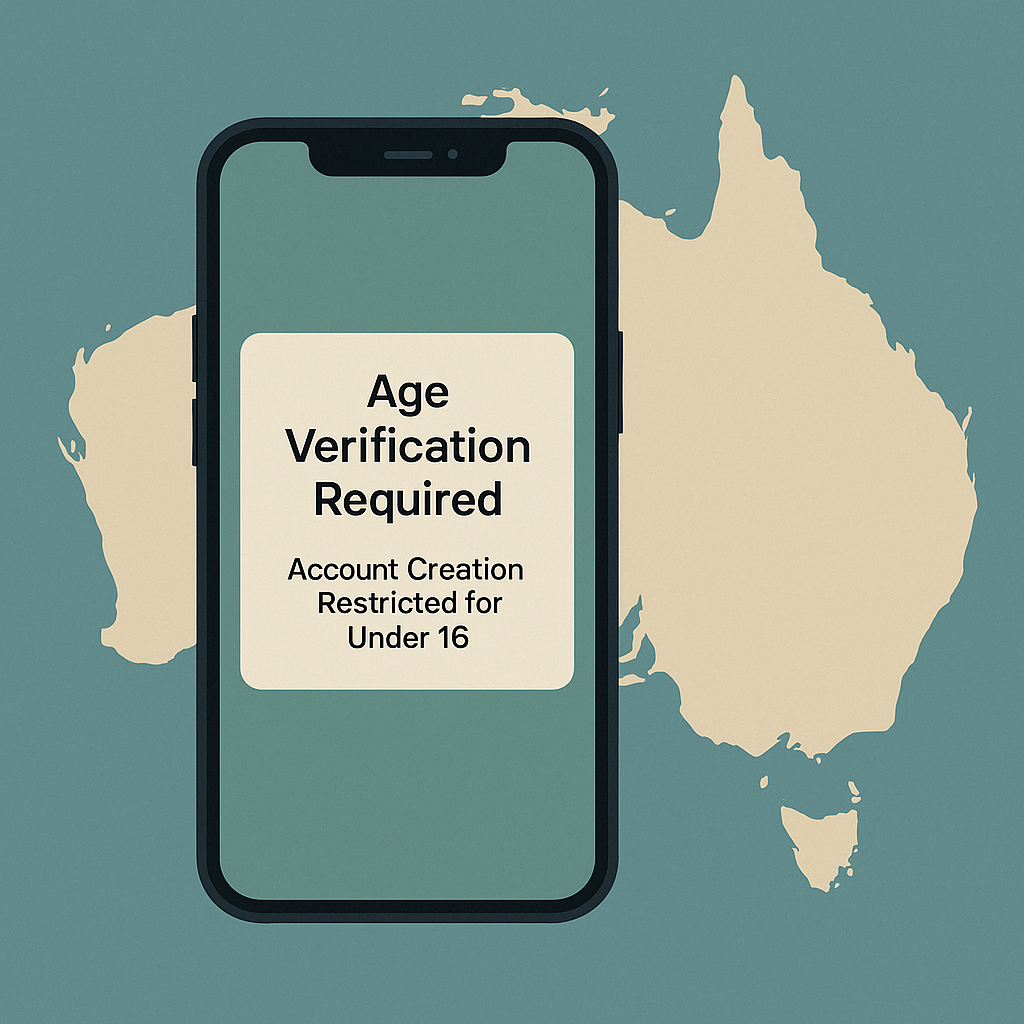
Australia has begun enforcing a nationwide rule requiring major social platforms to take “reasonable steps” to prevent people under 16 from creating or maintaining accounts. While often described as a “ban,” the policy operates as a platform-duty regime: regulators penalize companies that fail to comply, not minors or their parents.
At the center of the policy is a practical tradeoff. Platforms must demonstrate that they are blocking under-16 accounts, but regulators have not mandated a single verification method. Supporters argue this flexibility forces companies to shoulder responsibility for harms linked to youth social-media use. Critics warn it invites intrusive age checks, uneven enforcement, and unintended consequences for teens who rely on online communities.
Coverage diverged over how to frame those risks. Wire services emphasized enforcement mechanics, legal challenges, and uncertainty about compliance. Other outlets treated the rule primarily as a child-safety intervention, foregrounding mental-health concerns and the symbolism of government action. A third cluster focused on speech, privacy, and precedent, casting the policy as a test of how far democracies should go in regulating online access.
Scope has become a flashpoint. Because the law does not spell out a single definition of “social media” or “reasonable steps,” platforms face different interpretations about whether services like forums or video sites are covered. At least one major company has challenged the rule in court, arguing it misclassifies certain platforms and infringes protected speech.
The policy has also entered U.S. political debate, where reactions do not line up neatly along party lines. Child-safety advocates across the spectrum cite Australia as evidence that governments can impose meaningful obligations on tech platforms. Civil-liberties groups and privacy-focused lawmakers counter that similar measures risk normalizing age-based surveillance. Those competing frames—not the existence of the rule itself—drive the most significant disagreement.
Claim: Children or parents can be fined or punished if minors use social media under Australia’s new rule.
Origin: Viral posts and commentary describing the policy as targeting families.
Verdict: ❌ False
Rationale: Australia’s eSafety regulator states that enforcement applies to platforms that fail to take reasonable steps to prevent under-16 account creation. The rule does not impose penalties on minors or their parents. eSafety regulator guidance
Claim: The law requires Australians to upload government-issued identification to prove their age.
Origin: Civil-liberties critiques assuming mandatory identity verification.
Verdict: ❓ Unsupported
Rationale: Public guidance does not mandate a single verification method. Platforms must take “reasonable steps,” but regulators have not specified that government ID upload is required. eSafety regulator guidance
Claim: Platforms that fail to comply can face fines of up to about A$49.5 million.
Origin: Straight reporting on the law’s penalty ceiling.
Verdict: ✅ True
Rationale: Reporting and regulator materials describe civil penalties up to 150,000 penalty units, commonly cited as approximately A$49.5 million, for noncompliant platforms. Reuters
Claim: Australia’s rule functions primarily as a platform compliance obligation rather than a ban enforced against minors.
Origin: Explanatory coverage and regulator statements.
Verdict: ✅ True
Rationale: The law places responsibility on companies to prevent under-16 account creation through reasonable steps, with enforcement directed at platforms, not users. Reuters
| Outlet | Bar | Score |
|---|
| Outlet | Spin | Factual integrity | Strategic silence | Media distortion |
|---|
Reuters / AP: Both treated the restriction as a regulatory rollout with uncertain implementation. They kept competing frames in view and avoided overstating what the law guarantees in practice.
WSJ: Centered feasibility and second-order effects. That improved realism, but it shifted attention away from the child-safety case that drives political support.
CNN / MSNBC: Both leaned toward an intervention story. CNN stayed broadly accurate but compressed nuance. MSNBC amplified the harm-prevention rationale and gave less sustained attention to privacy tradeoffs and compliance variability.
Fox News: Presented the story as decisive action with a clear platform list and a clean policy headline. That framing can blur the difference between a platform-duty rule and a user-enforced ban.
Newsmax: Emphasized clampdown and penalties, minimizing tradeoffs and uncertainty. The result is a simplified “enforcement is settled” narrative that does not match early rollout ambiguity.
Imagery choices reinforced each outlet’s framing. Official rollout photos signaled state action; app-logo mosaics signaled platform culpability; teen-focused visuals emphasized daily-life disruption.